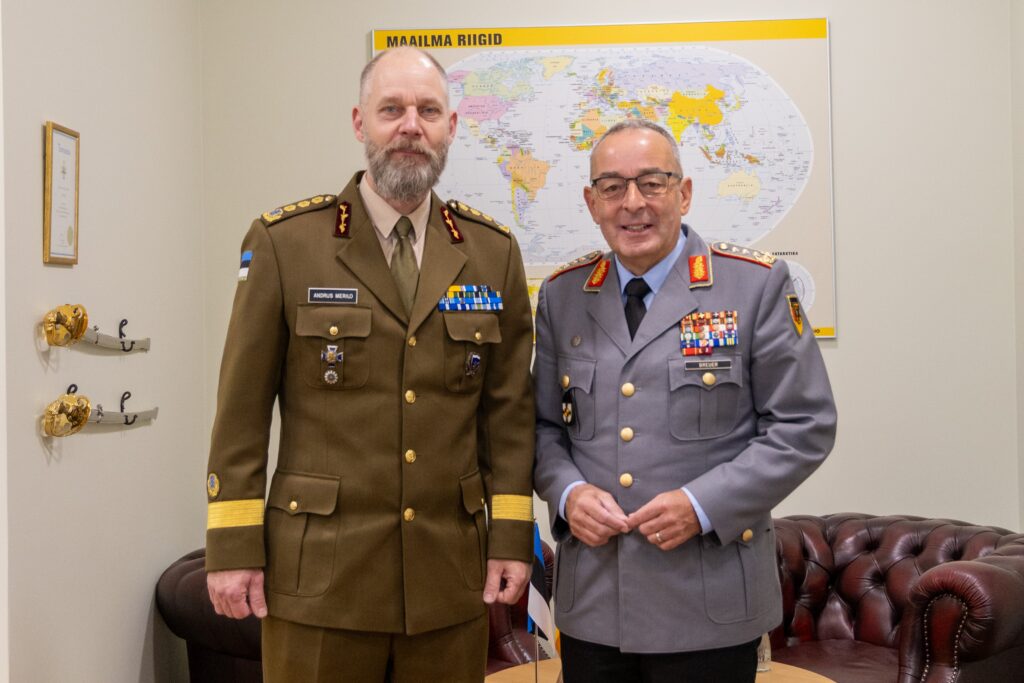
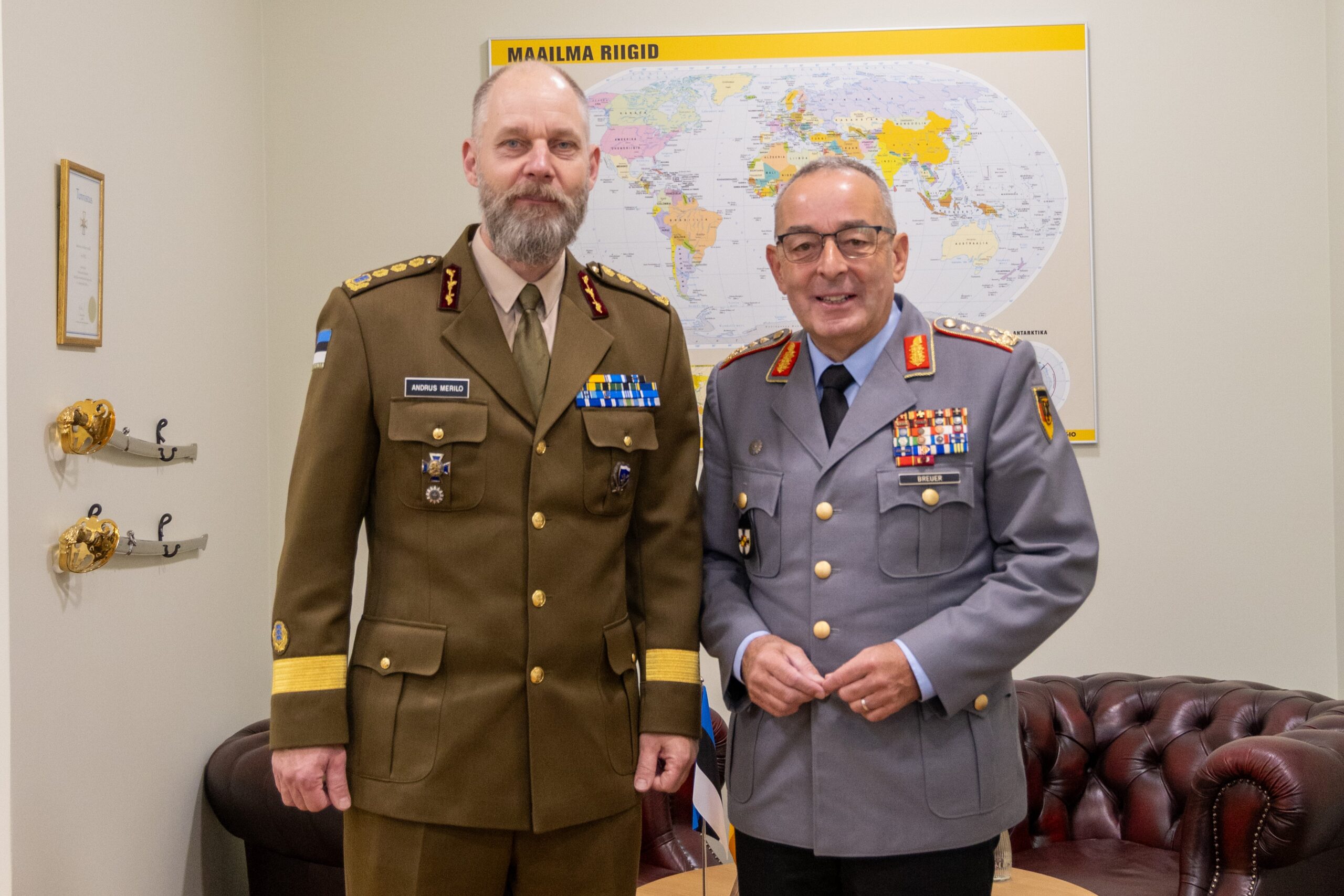
On Tuesday, 15 September, General Carsten Breuer, Chief of Defence of the German Armed Forces, paid a visit to Estonia, during which he had a meeting with Lieutenant General Andrus Merilo, Commander of the Estonian Defence Forces.
“Germany is an important ally for Estonia, and cooperation between our armed forces is close and practical. In today’s security environment, it is important that we develop our capabilities together with our allies, regularly practise the implementation of joint defence plans, and are prepared to act as a unified force. Germany plays an important role in this, both in strengthening security in our region and in developing NATO’s collective defence,” said Lieutenant General Andrus Merilo, Commander of the Estonian Defence Forces.
During the visit, an overview was provided of the security situation in the region and the activities of the Estonian Defence Forces, also future defence cooperation between Estonia and Germany was discussed. Particular attention was paid to the development of air defence capabilities, joint exercises and training, and the implementation of NATO’s regional defence plans. Possibilities for deepening practical cooperation between the two countries’ armed forces in Estonia, and more broadly in the Baltic Sea region, were also discussed.
“As allies, partners, and friends, Germany and Estonia stand shoulder to shoulder to defend NATO territory, airspace, and waters. The Bundeswehr is taking up responsibility in Europe, as can be seen in Estonia, Latvia and Lithuania. To protect the region even better, the 1st German-Netherlands Corps has been assigned new, critical tasks. Sincerely I thank General Merilo for his trustful cooperation, and the Estonian Armed Forces for their unwavering reliability. Together, we are stronger and ready to protect our shared security!” said General Carsten Breuer, Chief of Defence of the German Armed Forces.
Estonia’s defence cooperation with Germany is multifaceted, encompassing the presence of allies to bolster security along NATO’s eastern flank, joint exercises and training, capability development, and overseas operations. Through its participation in the 1st German-Netherlands Corps, Germany is also linked to NATO’s regional command structure. Germany contributes to the NATO Cooperative Cyber Defence Centre of Excellence in Tallinn, being one of the centre’s founding members and one of the largest contributors after Estonia. Germany has also been one of the most active supporters of the Baltic Defence College.