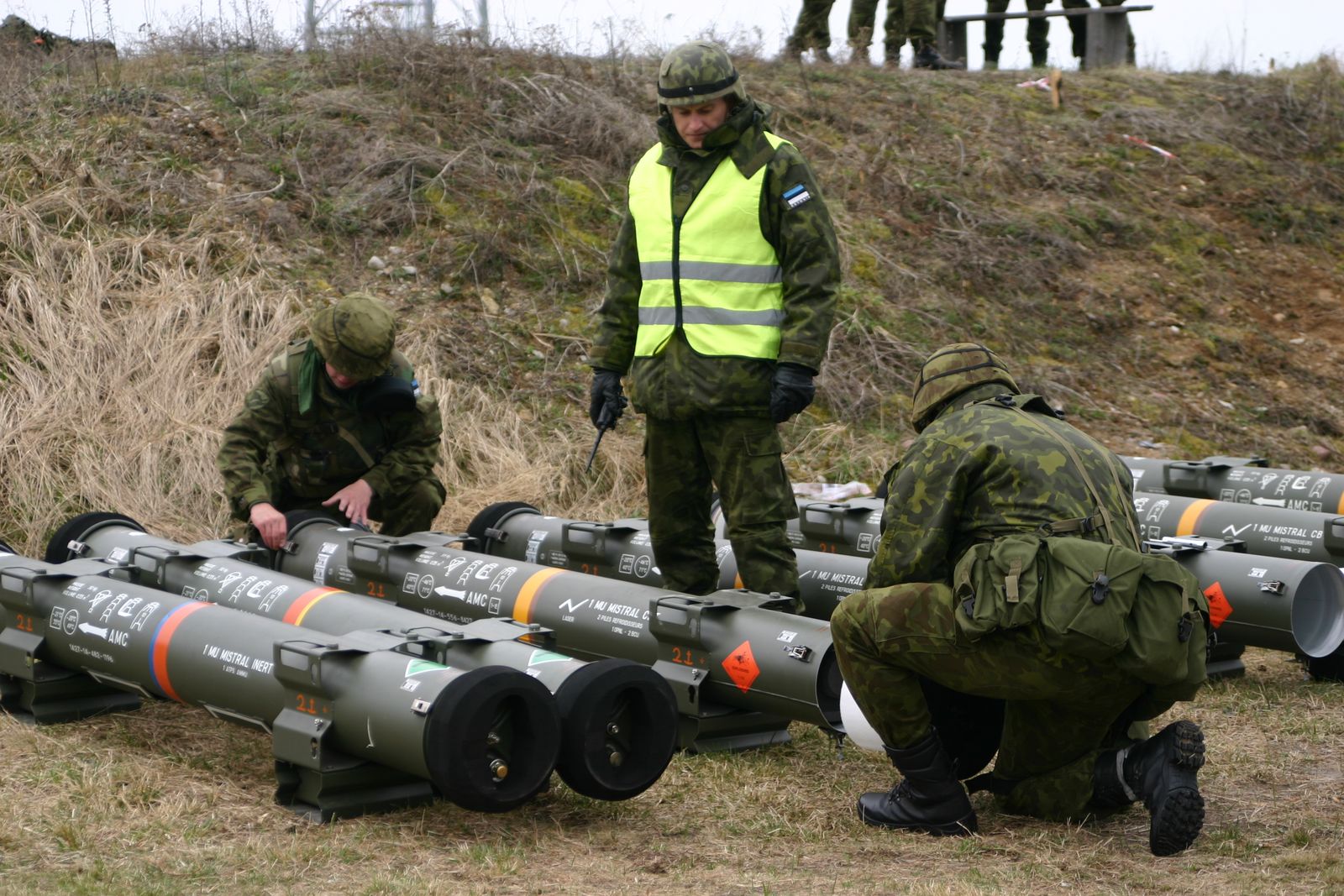
Soldier’s basic course (SBC) – 8 weeks
In the first months of the conscript service soldiers acquire the main skills of a single fighter.
In the basic course you learn about arms, orientation and first aid, you also acquire skills for forest camps, knowledge about the basics of tactics, behaviour in the Defence Forces and legislation.
The level of basic knowledge is checked with a theoretical and practical soldier’s exam. Those who pass it successfully are awarded a badge.
At the end of SBC, candidates are selected for the Junior Non-Commissioned Officer Basic Course (NCO), the Driver’s Specialty Course (DSC), and Soldiers Specialty Course (SSC).
Junior NCO course – 11 weeks
The course is divided in two: the NCO basic course of 5 weeks and the NCO specialty course of 6 weeks.
The basic course gives the future NCOs kernel knowledge necessary for a squad commander. The specialty course teaches a definite specialty, such as anti-tank action, fire control or signals and leadership of the respective teams.
The objective of the junior NCO specialty course is to teach the performance of a squad commander’s tasks in peacetime and wartime. A great emphasis is laid on practical exercises.
In the junior NCO specialty course conscripts can supplement their knowledge in the tactics of squad combat (defence, attack, guerrilla war, ambush), pedagogy, military psychology, leadership, combat engineering, medicine and signals, they are also taught to apply the above skills as squad commanders. The squad commander course ends with an NCO examination.
In the course of the squad commander course suitable candidates for reserve officer courses are selected.
Reserve officer course for conscripts – 7 weeks
In the reserve officer course conscripts who have passed the junior NCO course learn to command a platoon or four squads in peacetime and wartime conditions. In this course the earlier knowledge is supplemented by in depth training in platoon tactics, military psychology, leadership, medicine, signals, pioneer operations, infantry anti-tank action and other subjects. Every graduate of the NCO or reserve officer course has the right to apply for studies in the Military Academy.
Soldier’s specialty basic course (SSBC) – 6 weeks
The soldier’s specialty basic course provides knowledge and skills necessary for such specialists as riflemen, machine gunners, anti-tank grenade launchers, drivers, paramedics, etc. The length of the course depends on the complexity of the specialty. The specialty training terminates with a 3-week combat pair course where conscripts train the performance of combat tasks as members of combat pairs.
Driver’s specialty course (DSC) – 12 weeks
Conscripts who have acquired the right to drive a motor vehicle (usually category B) before military service are selected for the driver’s specialty course.
With the support of a driving school, the driver’s license (usually category C or CE, less often category D or A) necessary for performing military duties is acquired during the course.
In addition, the skills of using and maintaining a military vehicle are acquired during DSC, as well as the basic professional knowledge and skills of a wartime unit.
Specialty course (SC) – 12 weeks
During a specialty course, a soldier learns to perform the specialized tasks of his wartime position according to the characteristics of the unit and subunit. A specialty can be, for example, a machine gunner, grenade launcher, gunner-medic, marksman, engineer, signalman, mechanic or cook.
If possible, conscripts with previous relevant education, work experience or other prerequisites are selected for some specialties. The specialty acquired during conscription may also be useful in future studies and work.
Unit course (UC) – 22 weeks
Training of all conscripts together in the Unit Course (UC). The course teaches co-operation as a member of a squad, platoon, company and battalion.
If necessary, other daily military service tasks are also performed. During the course, you will often be in the countryside.
Co-operation exercise – 3 weeks
Conscription ends with a larger co-operation exercise, where conscripts from different units and branches of service and active military personnel practice co-operation in basic combat types.
Service summaries and closing events will take place a few weeks before conscripts are transferred to the reserve. In addition, the equipment and infrastructure used in the service are thoroughly maintained.